Orthodontics articles

How is orthodontic impression taking done?
Orthodontic impression

A beautiful smile is a sign of health and self-confidence, and if you have dental abnormalities, orthodontic impressions will be the first step to achieving a neat smile. In this process, the orthodontist makes a precise impression of the teeth so that devices such as braces or plates can be made based on it. Dr. Sirous Ghasemi, an experienced invisible orthodontist in Shiraz, offers complete services including invisible orthodontics, and in his office, impressions are done with digital precision and without discomfort. This is the basic step in designing the ideal smile, and the rest of the article will discuss the impression stages, its types, and important points before and after this process.

What is orthodontic impression?

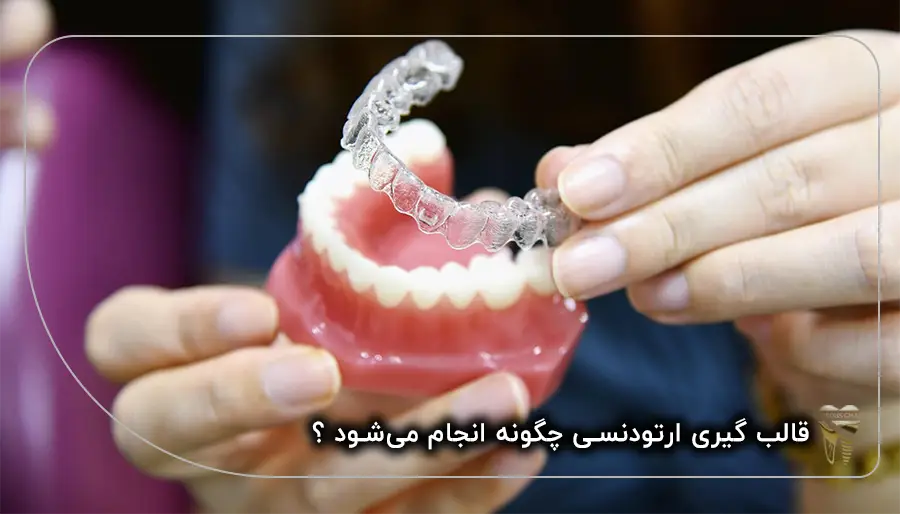
An orthodontic impression is the first step in the orthodontic process. In this step, the orthodontist will create an accurate mold of your teeth and gums using special materials. This mold provides a three-dimensional model of the current state of your teeth and is used as a basis for the fabrication of braces, aligners, and other orthodontic appliances.

Free dental visit by Dr. Ghasemi

Special conditions for installment dental services in Shiraz for patients who contact the office through the website

Dentistry of Dr. Sirous Ghasemi
Types of orthodontic impressions

How is a dental impression made for orthodontics?

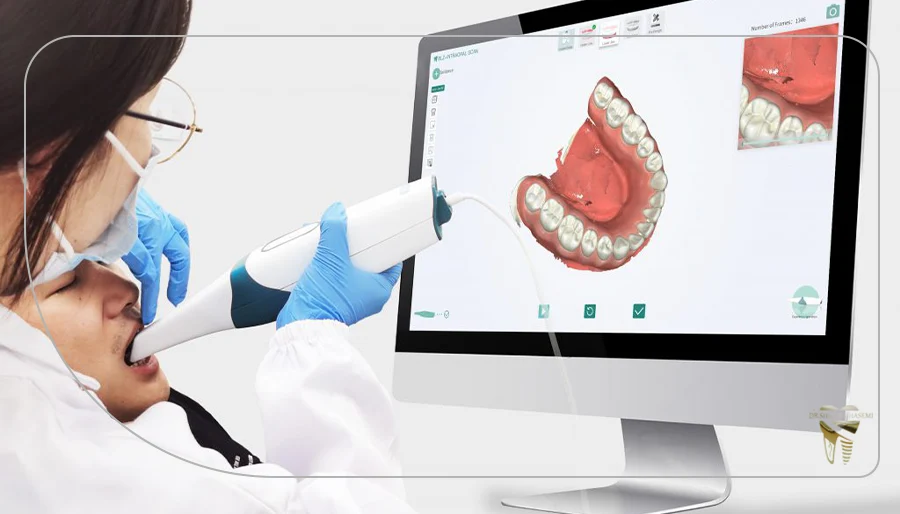
Orthodontic impressions are made with the aim of making a very accurate copy of the teeth. First, the teeth are examined and cleaned, then the doctor places the impression material in a special tray and holds it on the upper or lower teeth for a few seconds. After the material hardens, the impression is removed from the mouth and the exact model of the teeth is ready. In new methods, digital scanners have replaced traditional impressions and produce a 3D model of the teeth without paste and without discomfort.

Why should an impression be taken before orthodontic treatment?

Dental impressions are one of the most important steps in orthodontics, as the path of tooth movement must be completely engineered and based on accurate data. Reasons why impressions are important:

  • Accurately diagnose the degree of irregularity, spacing, and rotation of teeth
  • Precise design of fixed braces or invisible plates
  • Manufacturing completely custom equipment for the patient's mouth
  • Predicting the course of treatment and examining changes before and after
  • Increasing the accuracy of the final result and achieving the designed smile

How much does a dental impression cost for orthodontics?

Quoted from Dr. Sirous Ghasemi, the best clear orthodontic and composite dental doctor in Shiraz:

The cost of an impression varies depending on the method, type of material, and clinic. In Iran, traditional impression taking is usually less expensive, while digital impression taking is more expensive due to the advanced equipment. The table below provides a rough comparison:

Molding type

Approximate price range

Description

Traditional molding

1 to 5 million Tomans

With alginate paste, a common and cost-effective method

Digital molding

3 to 7 million Tomans

With oral scanner, no discomfort, very accurate

Custom impression for invisible orthodontics

4 to 9 million Tomans

Requires precise equipment and design software

Orthodontics without impressions

What is impression-free orthodontics?

Instead of using traditional plaster casts, which can be uncomfortable and even painful for some people, this method uses advanced 3D scanners to create detailed images of the teeth and jaw. These digital images are then used as the basis for the creation of orthodontic appliances such as braces and aligners. There are two main methods of orthodontics without casts:

  • Invisalign: This system uses clear, removable aligners to move teeth. Invisalign aligners are created using digital images and are perfectly tailored to your teeth.
  • SureSmile System: This system uses custom-made orthodontic wires to move teeth. SureSmile wires are created using digital images and precisely control tooth movement.


Materials and tools used for dental impressions

Orthodontic impression materials use a variety of materials, each with its own uses and benefits. Common impression materials include:

  • Alginate: The most widely used material, soft, fast and affordable.
  • Silicone (PVS): Very precise, suitable for orthodontics and complex prosthetics
  • Polyether: High accuracy for specialized cases
  • Dental waxes: for small corrections or registration of specific areas

Molding tools:

  • Plastic or metal molding trays
  • Molding spatula
  • Material mixing machine
  • 3D digital scanner (in digital method)

Orthodontic impression tools:

  • Plastic or metal molding trays
  • Molding spatula
  • Material mixing machine
  • 3D digital scanner (in digital method)

The role of dental casts after orthodontics

The dental impression after orthodontic treatment plays an important role in maintaining the final results. The final impression, which is prepared at the end of treatment, is used to make a retainer. The role of the impression after orthodontic treatment:

  • Making a clear or fixed retainer to prevent teeth from coming back
  • Evaluation of the extent of changes compared to the pre-treatment model
  • Recording the final status for the medical record
  • Ensuring the durability of the corrected smile and preventing re-displacement of teeth

Types of clear and regular orthodontic impressions

An orthodontic impression is the first step in the orthodontic process, in which the orthodontist takes an accurate mold of your teeth and gums. This mold will be the basis for making orthodontic appliances, such as braces, aligners, and other equipment needed to move and straighten your teeth. There are two main types of orthodontic impressions:

  1. Traditional orthodontic impression:

In traditional impressions, an impression material such as plaster or alginate is used. The orthodontist will first rinse your mouth with warm water and then mix the impression material in a special tray. The tray containing the impression material will then be placed over your teeth and you will be asked to remain still for a few minutes until the material hardens.

  1. Orthodontic digital impression:

In digital impression taking, 3D scanners are used to create detailed images of your teeth and gums. These images are then digitally converted into a 3D model that will be the basis for making your orthodontic appliances. The type of orthodontic impression that is right for you depends on several factors, including your budget, availability, and preferences. If you are looking for a more convenient and accurate method, digital impression taking may be a better option for you. However, if you are looking for a less expensive option, traditional impression taking may be the right choice for you.

What is a fixed orthodontic template?

Fixed orthodontic brackets work by adhering them to the front surface of each tooth using dental adhesive. Once the brackets are in place, orthodontic wires are passed through the brackets and attached to them using small bands or clips. The wires are gradually tightened, which puts pressure on the teeth and moves them into the desired position. There are several types of fixed orthodontic brackets, but the most common type is made of stainless steel. Other materials used for brackets include ceramic, plastic, and composite. Fixed orthodontic brackets usually stay in place for 12 to 24 months, but this can vary depending on the complexity of the dental malocclusion and the rate of tooth movement.

Steps before taking an impression in orthodontics

The orthodontic impression process is not just a short session; it is preceded by several key steps to achieve an accurate, error-free result that perfectly matches the patient’s oral structure. These steps serve as the diagnostic infrastructure, and any inaccuracy in them can affect the entire treatment process.

Steps

Explanation

Why is it important?

Initial oral examination

Examination of decay, gums, and tooth structure

Preventing errors in the template and detecting hidden problems

Teeth cleaning

Plaque and tartar removal

Increase mold accuracy and prevent bubbles

Gum assessment

Check for inflammation and bleeding

Preventing mold deformation and detection errors

Humidity control

Saliva regulation with suction device

Preventing materials from forming incorrectly

Choose a size.

Determining the appropriate impression for the patient’s jaw

Prevent pressure, pain or an imperfect mold

Below, we will tell you about two types of orthodontic tools, quoted from the Fara Teb Pishro website:

What is a ligature pen and what is its use?
To place orthodontic brackets and bands, a tool with a very thin rod is needed. The ligature pen is the best tool for placing and adjusting brackets in the orthodontic process. The body and double-sided opening of this pen are made of stainless steel and are highly resistant to impact and moisture. The elegant design of this tool makes it easy to use in narrow and narrow spaces.

What is a cutter and cutter tool or ligature cutter?
The ligature cutter tool is very suitable for cutting ligature wires. The cutter and cutter jaws are made of tungsten carbide and never lose their original quality. The edges of each of the jaws of this tool are sharpened with diamonds and therefore have very high cutting power.

Dr. Ghasemi's Digital Dentistry

The most equipped digital dentistry in Shiraz and the south of the country

Dentistry of Dr. Sirous Ghasemi

Types of orthodontic trays in terms of material

In orthodontics, the quality of the impression directly affects the outcome of the treatment. The choice of the type of impression material is based on the accuracy required, the patient’s oral condition, and the orthodontist’s preference. The three main families of impression materials include polyethylene (PE), vinyl polysiloxane (VPS), and hybrid (PVES).

1. Polyethylene (PE)

Polyethylene is one of the older generations but still useful in orthodontic impression making. This material is commonly used for initial impressions, initial evaluations, and fabrication. study model is used.

Features and uses:

  • Suitable flexibility for quick placement in the mouth
  • Medium accuracy, suitable for initial checks
  • Lower price than more advanced materials
  • Relatively fast setting
  • Suitable for patients who are prone to nausea due to lighter consistency

Advantages:

  • Affordable
  • Easy to use
  • Suitable for early diagnostic molds

Limitations:

  • Less precision for specialized orthodontic impressions
  • Possibility of distortion in very fine details

2. Vinyl polysiloxane (VPS)

VPS is one of the most precise and advanced impression materials in orthodontics and dentistry. Due to its high dimensional stability, these materials are used in final impressions before the fabrication of clear plates, braces, and aligners.

Features and uses:

  • Very high accuracy in recording fine enamel lines
  • Long-term dimensional stability
  • No shrinkage after setting
  • Suitable for digitizing templates and making aligners
  • No unpleasant odor or taste

مزایا:

  • The best choice for precise orthodontic impressions
  • Insensitivity to moisture
  • High strength against tearing when leaving the mouth

Limitations:

  • Higher price
  • Requires more skill when mixing and applying

3. PVES hybrid materials

A blend of polyethylene (PE) and vinyl polysiloxane (VPS)

This new generation aims to strike a balance between affordable price and high accuracy. PVES has replaced PE and even VPS in many modern clinics.

Features and uses:

  • Combining PE flexibility with VPS precision
  • Faster setup than VPS
  • Suitable for regular and semi-precision molding
  • Suitable for making retainers, orthodontic plates and mid-treatment check-ups

Advantages:

  • More affordable than VPS
  • Easier to use and softer in the mouth
  • Acceptable accuracy for many orthodontic applications

Limitations:

  • Still not as accurate as VPS
  • Less recommended in sensitive cases or very precise work.

Orthodontic dental impression video

Traditional orthodontic impression steps

The steps of orthodontic impression making are as follows:

  1. Initial examination: At this stage, the orthodontist will thoroughly examine the condition of your teeth and gums and diagnose your orthodontic needs.
  2. Preparation: Before the impression is taken, your teeth will be cleaned and dried.
  3. Choosing an impression material: The orthodontist will choose the appropriate impression material based on your condition.
  4. Placing the impression: The impression material is made into a paste and placed on a special tray. The tray containing the impression material is then placed in your mouth and you are asked to remain still for a few minutes until the material hardens.
  5. Removing the impression: After the material has hardened, the impression is gently removed from your mouth.
  6. Checking the mold: The orthodontist carefully checks the mold to ensure its accuracy and precision.

What are the steps after molding?

  1. Template review

The orthodontist will carefully examine the impression to ensure its accuracy. If necessary, you may be asked to return to the clinic to get a new impression.

  1. Manufacturing of orthodontic instruments

Using the information from the impression, your orthodontic appliances, such as braces, plates, or wires, are made. This process may take a few days or a few weeks, depending on the type of orthodontic treatment and the complexity of your dental malformation.

  1. Installing orthodontic appliances

Next, your orthodontist will fit your braces to your teeth. This process may be a little uncomfortable, but it is usually not painful. Your orthodontist will give you care instructions to help you take good care of your braces.

  1. Regular visits

During your treatment, you will need to see your orthodontist regularly for check-ups and adjustments to your orthodontic appliances. The number of visits will vary depending on the type of orthodontic treatment and the progress of your treatment.

Disadvantages and complications of orthodontic impression taking

Although orthodontic impressions are a necessary and basic step to begin treatment, like any other dental procedure, they can pose challenges for some patients. One of the most common problems is a feeling of pressure or heaviness when the tray is placed in the mouth, which may be a little uncomfortable for people with reflux or throat sensitivity.

In rare cases, the taste or smell of the impression material can cause nausea or temporary discomfort. Some patients report a slight sticky feeling or unpleasant taste on the teeth after the impression is removed, which is completely temporary. Sensitivity to some impression materials has also been seen, although this is very rare and usually resolves with a suitable replacement material.

With traditional impressions, there is the possibility of human error, impression displacement, or incomplete registration of some details, which if not corrected may result in a re-impression. Finally, the pressure applied to the teeth when removing the impression may cause a few seconds of discomfort, which usually has no consequences for the teeth or gums.

Conclusion

Orthodontic impressions are the gateway to straightening your teeth and achieving a beautiful, well-groomed smile. This process is the first step in orthodontic treatment, and involves your orthodontist taking an accurate impression of your teeth and gums. This impression will be the basis for the creation of orthodontic appliances, such as braces, aligners, and other devices needed to move and straighten your teeth. There are two main types of orthodontic impressions: traditional impressions and digital impressions. Each of these methods has its own advantages and disadvantages, and choosing the right one for you depends on a variety of factors, including your budget, availability, and preferences.

دندانپزشکی دیجیتال دکتر قاسمی

The most equipped digital dentistry in Shiraz and the south of the country

Dentistry of Dr. Sirous Ghasemi

Leave a Reply

Your email address will not be published. Required fields are marked *